
Activities
CONTENTS
ASU Master Class: Innovation Meets Ethics – Enhancing Technological Competence in the Legal Field
.jpg)
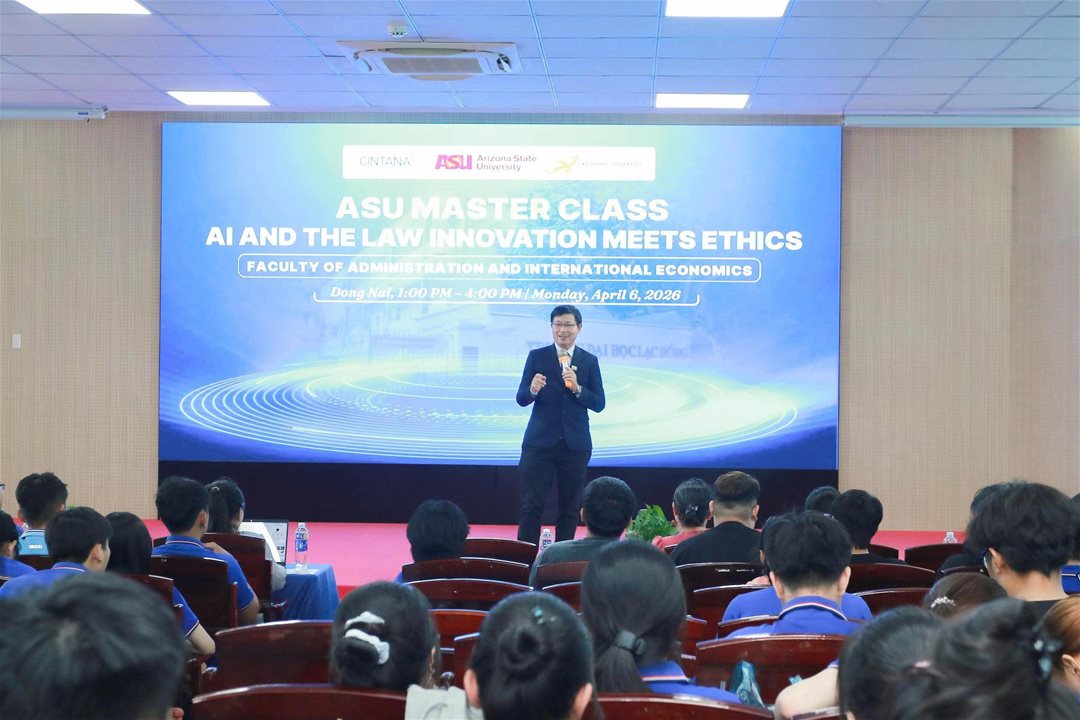
On the afternoon of April 6, 2026, the Faculty of Administration – International Economic, Lac Hong University, organized the ASU Master Class: Innovation Meets Ethics for students majoring in Law and Economic Law. The program was implemented within the framework of academic cooperation, aiming to equip students with foundational knowledge and a mindset to approach legal issues in the context of digital transformation.
Orientation from the University Leadership
The program began with the introduction of delegates and an opening speech by PhD. Nguyen Van Tan – Vice President of the University. In his remarks, he emphasized the inevitable need to continuously update legal knowledge in response to the rapid development of technology.
Accordingly, the legal field should not be limited to theoretical approaches but must proactively innovate and apply technology to better align legal practice with real-world demands. At the same time, students are encouraged to actively participate in academic activities and expand their learning environment beyond the classroom to access updated and practical legal knowledge.
Notably, he also appreciated the program’s structure of short thematic sessions, combining English content with Vietnamese explanations. This approach ensures that all students can access the material effectively while improving their language proficiency and learning outcomes.
Implementation of Key Academic Content
Within the program, academic content was systematically designed to align with current trends in applying technology to the legal field, especially artificial intelligence (AI).
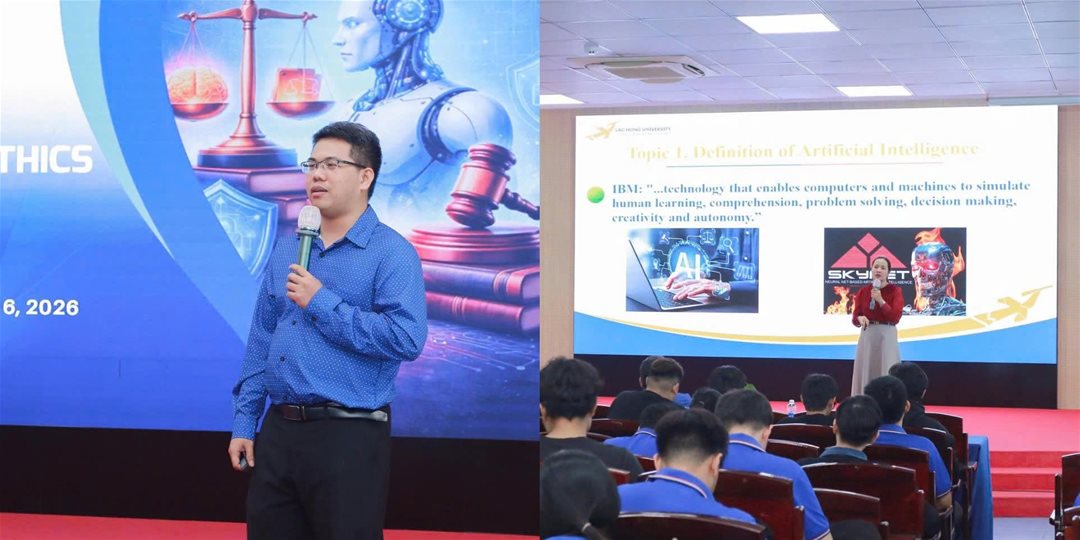
At the beginning, MBA. Vu Thi Thanh Huyen – Vice Dean of the Faculty of Administration – International Economic, introduced an overview of artificial intelligence, including its concepts, nature, and development levels. Through this session, students gained not only theoretical foundations but also gradually developed an awareness of the role of technology in modern contexts.
Following this, MBA. Vo Anh Phuc presented a specialized topic on integrating AI into the legal field and judicial systems. The content clarified how AI can support legal activities, from data analysis and decision-making assistance to improving dispute resolution efficiency. He also highlighted goals and future potential of AI applications, helping students gain a clearer orientation toward future career trends.
Enhancing Interaction and Multi-Dimensional Learning
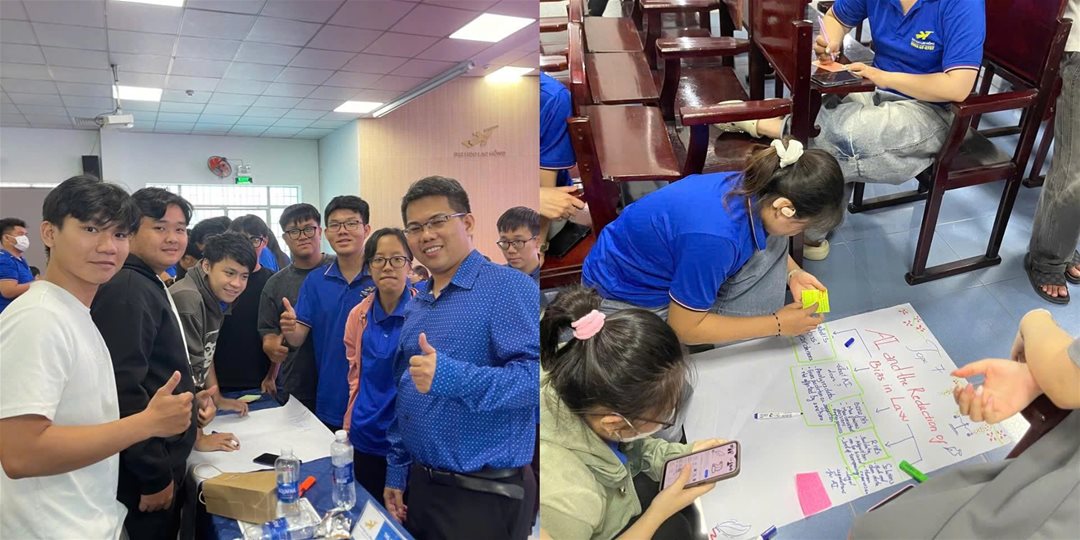
The program was designed with interactive activities to create an engaging learning environment and improve knowledge absorption. Mini-games contributed to energizing the classroom, encouraging active student participation while reinforcing learned content in an accessible way.
Through these activities, students not only acquired knowledge but also had opportunities to exchange ideas, provide feedback, and approach issues from multiple perspectives, thereby fostering analytical thinking and practical application skills.
Developing Skills Through Group Discussions
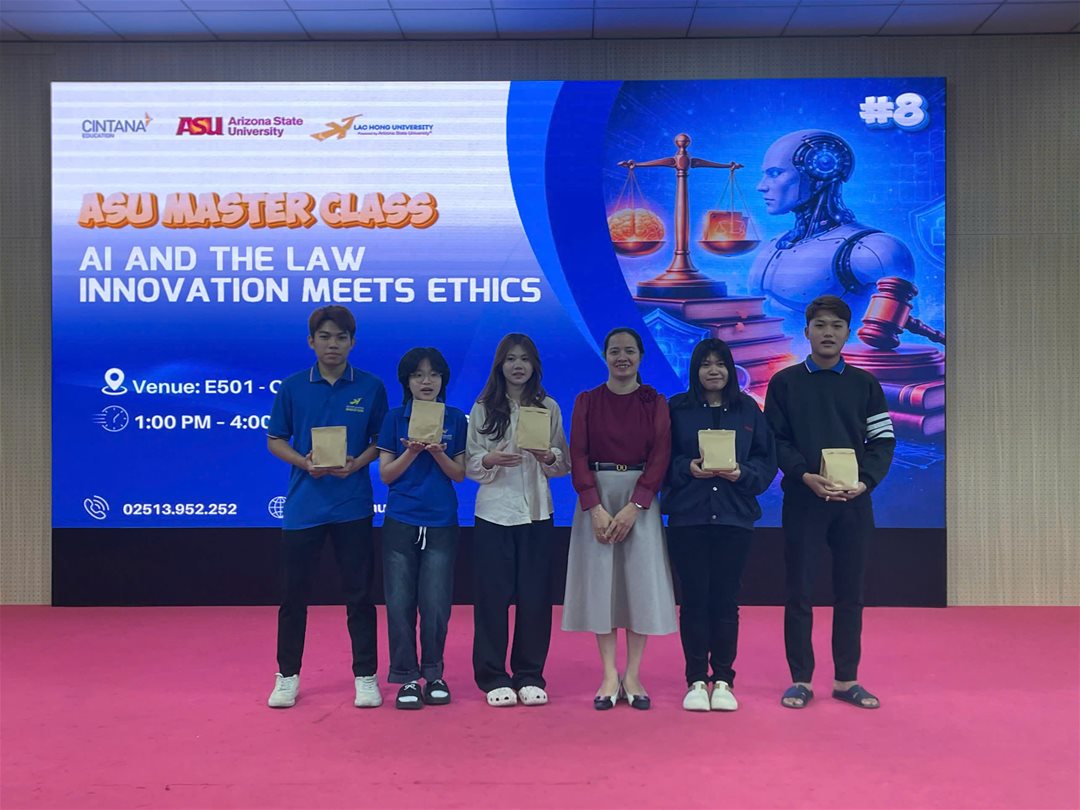
In addition to academic sessions, students participated in group discussions and presented their viewpoints on given topics. This activity allowed them to apply acquired knowledge while developing critical thinking and argumentation skills. Direct exchanges among groups also broadened perspectives, helping students approach issues more comprehensively and practically.
Orienting Proactive Learning Methods
Through the program, students were guided to develop proactive learning strategies with clear direction. Note-taking, asking questions, and engaging in discussions with lecturers were emphasized as key factors to enhance learning effectiveness. These are not only essential academic skills but also a foundation for long-term professional development.
Academic Value and Practical Significance
ASU Master Class: Innovation Meets Ethics not only provided updated knowledge on technology in the legal field but also contributed to shaping students’ mindset and learning approaches. The program offered an opportunity for students to engage with practical insights, gradually improve their competencies, and prepare to meet the increasing demands of the legal profession in the era of digital transformation.
